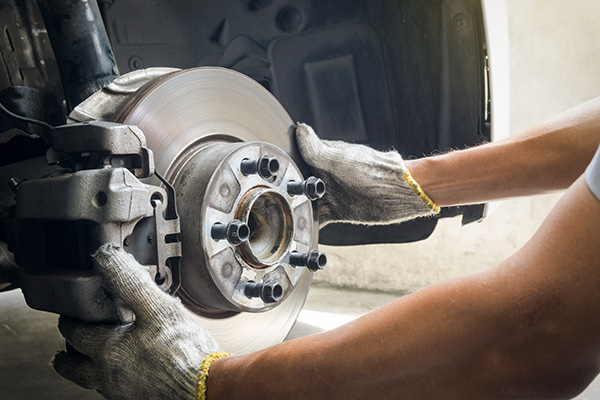
A steering wheel that shakes when you brake at high speeds can be unnerving. The car may feel fine around town, then suddenly start vibrating when you slow from highway speeds or come down an off-ramp.
That shake is usually your car’s way of telling you that something in the brakes, suspension, or wheels is no longer working the way it should.
Why Your Steering Wheel Shakes When Braking at Speed
Most of the time, steering wheel vibration under braking comes from the front of the car. When you step on the pedal, the front brakes do most of the work, and any small problem there shows up as a pulse you can feel in your hands. At low speeds, it may feel like a light wobble, but as you get into highway ranges, that same issue can feel much stronger.
The shake may start only in a narrow speed range, such as slowing from 65 to 45 mph. As parts wear more, it often shows up at lower speeds too. If you notice a new vibration that seems tied to braking, it is worth paying attention before it starts to affect every stop you make.
What Happens in Your Braking System at Highway Speeds
When you press the pedal, hydraulic pressure squeezes the brake pads against the rotors. At higher speeds, those rotors have to absorb and shed a lot of heat in a short time. If the friction is smooth and even, you feel a solid, steady slowdown, and the steering wheel stays calm.
If a rotor has high and low spots, or the pads are not making even contact, the brakes grip harder in some areas than others. That uneven grip is what creates a pulsing or shaking sensation in the steering wheel. We often see drivers describe it as “the wheel dancing in my hands” when the rotors are badly uneven, or the front suspension has extra play.
Common Causes of Steering Wheel Shake Under Braking
Several issues can show up as a steering wheel shake when you brake:
- Slightly warped or uneven front brake rotors that grab more in one section than another
- Worn or loose suspension parts, such as ball joints or control arm bushings, that let the wheel move around under load
- Wheel bearings with play that becomes obvious once braking forces hit at higher speeds
- Wheels that are bent from potholes or curbs and show their damage most clearly during hard braking
- Old, unevenly worn tires that exaggerate every small vibration when you slow down
Sometimes you will find more than one of these at the same time. For example, a car might have older rotors and a loose control arm bushing, which makes the shake much worse than either problem would be on its own.
Symptom Timeline: From Mild Vibration to Serious Warning
Early on, the only sign might be a slight buzz in the wheel when slowing from highway speeds. The pedal may feel normal, and you might not hear any noises. Many drivers live with this stage for a while because the car still stops, even if it does not feel as smooth as it used to.
As the problem grows, the vibration often becomes stronger and shows up at lower speeds. The brake pedal can start to pulse, and you may hear light grinding or scraping when you slow down. Left alone long enough, you may get a steering shake combined with a pulling sensation to one side, which is a stronger warning that brake repair or suspension work is due.
Owner Mistakes That Can Make the Shake Worse
Some common reactions to brake shake can actually speed up wear:
- Ignoring the vibration until it becomes severe, which allows rotors and pads to wear unevenly together
- Relying on very cheap replacement parts that may not handle heat as well at highway speeds
- Riding the brakes downhill instead of using lower gears, which overheats rotors and can cause them to become uneven
- Skipping tire rotations and balance checks, which can hide or blend in steering problems until they get much worse
From a service standpoint, dealing with a light vibration early is nearly always cheaper than waiting until the steering wheel feels like it is shaking out of your hands.
When a Steering Wheel Shake Becomes a Safety Issue
Any steering wheel movement under braking means the tires and suspension are not staying as steady as they should. That can lengthen stopping distances and make the car harder to control during emergency maneuvers. If the shake is strong, shows up at many speeds, or is paired with noises, a burning smell, or a pull to one side, it has moved into “do not wait” territory.
At that point, a thorough brake inspection, suspension check, and road test can pinpoint the cause and guide the right brake repair or steering and suspension repair.
Get Steering Wheel Shake and Brake Repair in Baltimore, MD with Paul's Automotive
If your steering wheel shakes when you brake at high speeds, that is a clear sign your car needs attention before the problem grows. We can inspect your brakes, tires, wheels, and suspension, then explain exactly what is causing the vibration and what it will take to fix it. We work to restore smooth, confident stops so you feel in control every time you slow down.
Schedule steering and brake repair with Paul's Automotive in Baltimore, MD, and let us help you get back to a stable, comfortable drive.